There comes a point in almost every Bannerlord campaign when your personal party simply isn't enough anymore. Early on, you can solve most problems yourself by recruiting better troops, upgrading companions, and winning battles through good tactics. As kingdoms grow larger and wars become more intense, though, you eventually reach a stage where enemy armies start appearing with hundreds or even thousands of soldiers. At that point, trying to handle everything with a single party quickly becomes frustrating.
I learned this the hard way during one of my first serious campaigns. I had spent hours building an elite force and felt pretty confident about my chances against almost anyone. Then an enemy kingdom gathered a massive army, marched straight through our territory, and started besieging settlements faster than I could respond. That's when I realized Bannerlord eventually stops being about individual parties and starts becoming a game of armies.
Fortunately, creating and leading an army is fairly straightforward once you understand how the system works.
You Must Belong To A Kingdom
Before you can create an army, you need to be part of a kingdom. This can either be a kingdom you've joined as a vassal or one you've created yourself. If you're still an independent clan, the option simply won't appear, no matter how many troops you have.
This tends to confuse newer players because they often assume army size is the deciding factor. In reality, the mechanic is tied directly to kingdom politics rather than military strength.
Even if you're leading an elite force capable of defeating enemy lords on your own, you still won't be able to gather armies until you're officially part of a kingdom.
Once you become a vassal or ruler, however, the entire system opens up.
Influence Is What Keeps Armies Running
If denars are the currency of your clan, influence is the currency of your kingdom.
Every time you invite another lord to join your army, influence is spent. Maintaining that army also requires influence over time, which means creating a massive force isn't always the smartest decision. I've made the mistake before of gathering every available party simply because I could, only to watch my influence disappear far faster than expected.
Because of this, it's worth building up a healthy influence reserve before planning any major campaign. Winning battles, helping allied armies, participating in wars, and supporting kingdom decisions all help generate influence, and the more of it you have, the easier it becomes to keep armies together when you actually need them.
How To Form An Army
Once you're part of a kingdom and have enough influence available, forming an army only takes a few moments.
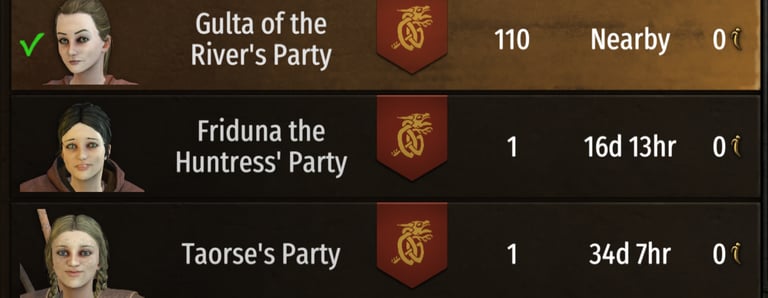
Open the Kingdom menu and navigate to the Army tab. You'll see a list of parties belonging to other clans within your kingdom, along with the influence cost required to recruit them.
From there, you simply choose which parties you want to invite and wait for them to arrive at your location. To create an army, open the Kingdom menu and navigate to the Armies tab. Click "Create Army", then select the nobles or parties you want to invite and confirm your choice. Once they arrive at your location, they'll automatically join your army, allowing you to command all participating parties as a single force.
The first time you do this is surprisingly satisfying. Watching multiple friendly parties travel across the map to rally under your banner genuinely makes you feel like an important figure within the kingdom. Suddenly, instead of commanding a few hundred soldiers, you're leading a force capable of capturing towns and defeating major enemy armies.
When I first started using armies, I assumed the goal was always to recruit as many parties as possible.
After a few campaigns, I realized that approach often creates more problems than it solves.
Large armies consume influence quickly, move more slowly across the map, and require constant attention to maintain cohesion. In many situations, a smaller force made up of strong clans can accomplish exactly the same objective while costing significantly less.
Before creating an army, I usually think about what I'm actually trying to achieve. If I'm preparing to besiege a major city or stop an enemy invasion, then a large army makes sense. If I'm chasing a few enemy lords or defending a castle, bringing half the kingdom along is often unnecessary.
Being selective tends to work much better in the long run.
Keep An Eye On Cohesion
Cohesion is easy to ignore until it suddenly becomes a problem.
Every army gradually loses cohesion over time, and if it drops too low, parties begin leaving.
Nothing is more frustrating than preparing for an important siege only to discover that half your army has decided to go home because cohesion wasn't maintained.
For that reason, I always check cohesion regularly whenever I'm leading an army. Spending a little influence to keep everyone together is usually far cheaper than rebuilding the entire force later.
It's a simple mechanic, but paying attention to it can save a lot of headaches during long campaigns.
Companion Parties Are Extremely Useful
A trick I didn't fully appreciate when I first started playing Bannerlord was how valuable companion-led parties can be.
Once your clan reaches a high enough tier, you can assign companions to lead their own parties. These parties can then join your armies just like any other force, giving you additional troops without relying entirely on other clans.
I almost always create companion parties in the mid-game because they provide extra flexibility and make it much easier to assemble armies quickly. Since they're part of your own clan, they also tend to be more reliable than depending solely on allied nobles.
Over the course of a campaign, those extra parties can make a surprisingly large difference.
Final Thoughts
Learning how to use armies properly completely changed the way I approached Bannerlord.
Before I understood the system, wars often felt reactive, with me constantly rushing from one problem to another while stronger enemy factions dictated the pace of the campaign. Once I started creating armies and coordinating multiple parties, I finally felt like I was influencing the course of wars instead of simply responding to them.
That's really what armies provide. They aren't just larger groups of troops. They allow you to project power across the map, defend multiple objectives, and tackle challenges that would be almost impossible for a single party to handle alone.
If you're reaching the stage of the game where kingdoms are clashing regularly, learning how to build and manage armies is one of the most valuable skills you can develop.
How To Create An Army in Bannerlord